Discussion and Enhancement of the Educational Program 6B11101 – Tourism with the Participation of Faculty, Experts and Students
On February
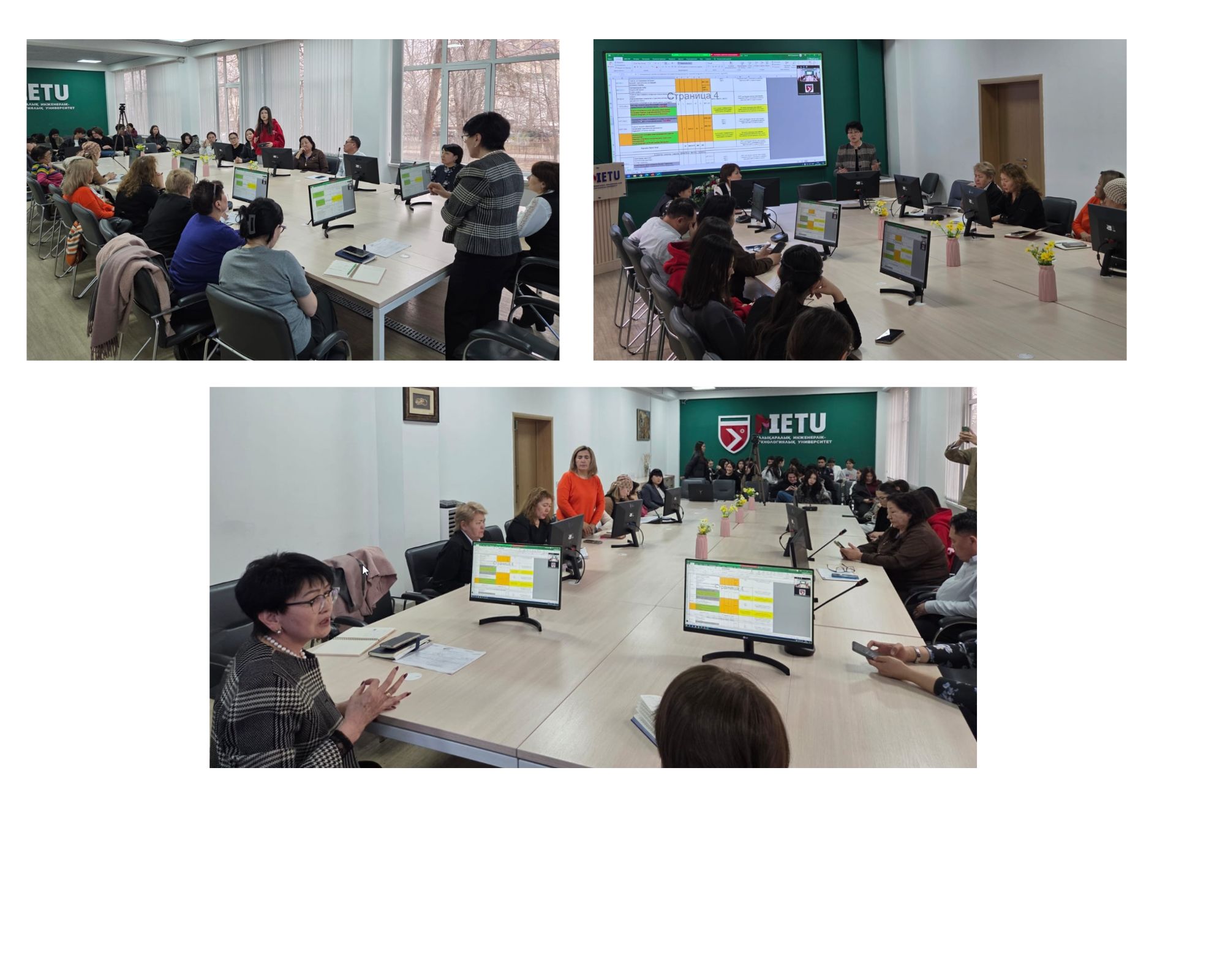
20, 2026, an open meeting of the Academic Committee of the Tourism educational
program was held at MITU. The meeting focused on updating the program in line
with current trends in the tourism industry, labor market requirements,
digitalization of the service sector, and international professional standards.
The meeting
was attended by representatives of travel companies and the hospitality
industry, faculty members, academic experts, and students. During the session,
updated course proposals were presented, and issues related to strengthening
practice-oriented training, expanding internship bases, introducing digital
tools in tourism product management, and enhancing cooperation with the tourism
industry were discussed.
Director of
Makus LLP, L.T. Ussenova, noted that the Tourism educational program should
combine managerial, economic, and service competencies, as well as digital
marketing and data analysis skills in the field of tourism. She proposed
strengthening the analytical and entrepreneurial components of the program by
expanding the block of courses on tourism project management and destination
development.
Professor
M.A. Tleuzhanova substantiated the need to introduce the course “Microeconomics
and Market Mechanisms in Tourism” instead of “Microeconomics in Tourism” to
develop students’ systematic understanding of tourism market functioning,
supply and demand mechanisms, pricing strategies, and the behavior of economic
agents in tourism.
She
emphasized that mastering this discipline would enable future specialists to
analyze the market environment, assess the costs of tourism enterprises, make
informed managerial decisions under different market structures, and consider
the impact of externalities and investment processes on the development of the
tourism industry.
Within the
“Digital Technologies in Tourism” track, it was proposed to introduce the
course “E-tourism and Digital Marketing,” aimed at developing competencies in
online promotion of tourism services, working with tourism platforms, and using
analytical tools to enhance competitiveness.
Lecturer
A.M. Doskaranova highlighted that the program is practice-oriented and meets
modern requirements of the tourism industry. She noted that the well-balanced
combination of economic disciplines, management modules, and specialized
tourism courses enables students to develop a comprehensive understanding of
tourism market operations.
Overall, the
lecturer expressed confidence that the Tourism educational program ensures
high-quality training of specialists capable of working effectively in
conditions of intense competition, digital transformation, and the dynamic
development of the tourism and hospitality industry.
Vice-Rector
for Academic Affairs and International Relations A.A. Abdildaeva explained that
when developing the curriculum, regulatory requirements and mandatory
disciplines are taken into account, ensuring compliance with national higher
education standards and international recommendations in the field of tourism.
Head of the
Department of Economics and Business Zh.T. Dildebayeva thanked all participants
— faculty members, experts, employers, and students — for their active
participation, constructive proposals, and contribution to the development of
the educational program. Such meetings contribute to improving the educational
process and enhancing the quality of specialist training.