LANGUAGE — THE SOUL OF A NATION, A LEGACY FOR GENERATIONS
On September 5th, on the eve of the Day of Languages of the Peoples of
Kazakhstan, METU University hosted an instructive and meaningful meeting with
first-year students who had only just crossed the university’s threshold this
year.
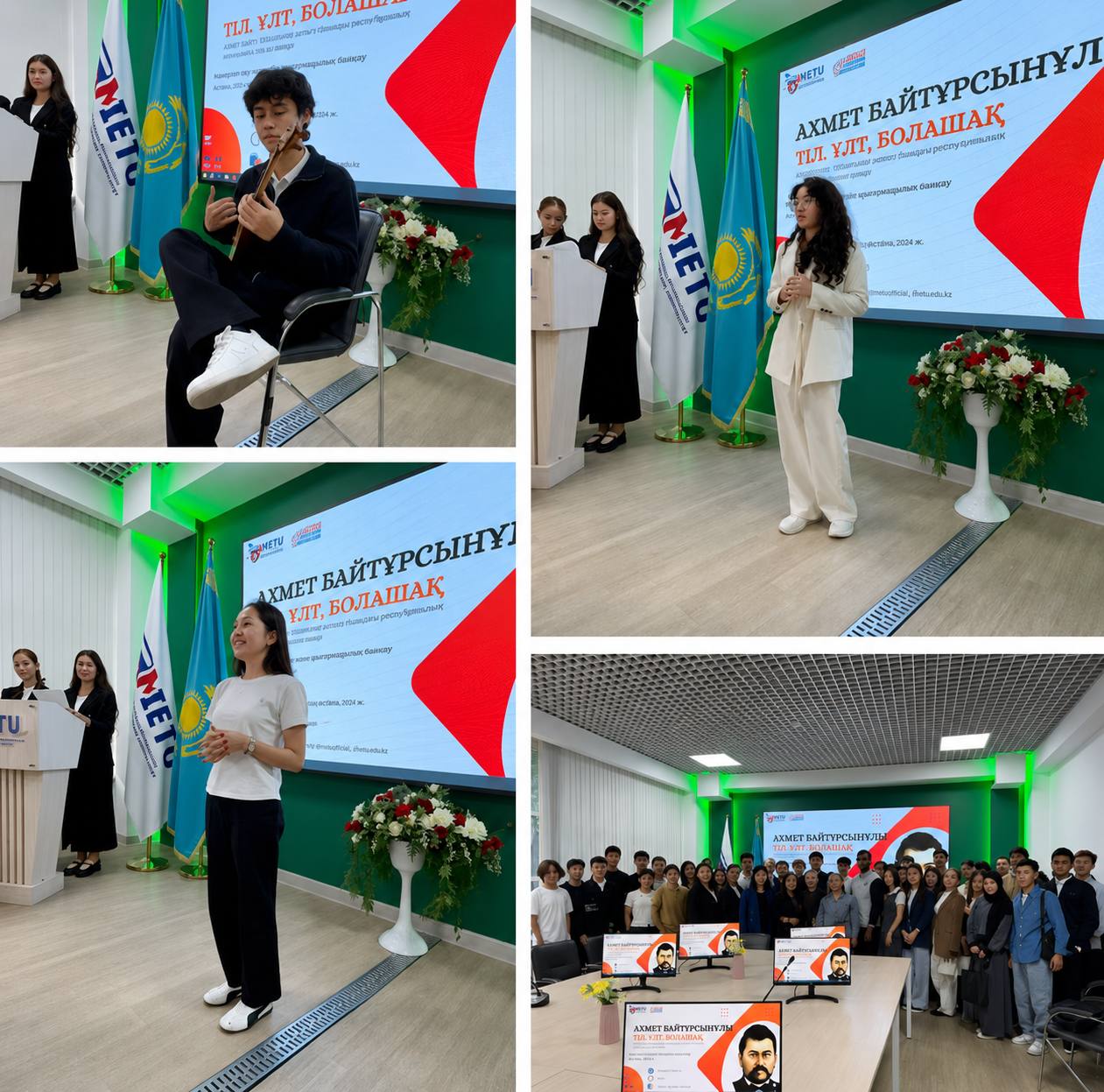
The educational event,
organized by the faculty of the Department of Social-Humanitarian Disciplines
and World Languages, was dedicated to the theme “Akhmet Baitursynuly: Language,
Nation, Future.”
The event took place in the library of Building No. 2 of our university,
with first-year students in attendance.
The heart of the gathering
centered on the immeasurable contribution of Akhmet Baitursynuly — an
outstanding son of the Kazakh people and mentor of the nation — to linguistics,
national script, and enlightenment. Students gained fresh insights into the
great figure’s life and work, his contribution to the development of Kazakh
linguistics, and became acquainted with his ideas linking the fate of the
language to the future of the nation.
The meeting was not
limited to information-sharing; it took the form of an open dialogue platform
with a free exchange of views between students and faculty. Young people shared
their thoughts on the importance of language in human life, in society, and in
the country’s future, along with their own attitudes toward language.
During the event, engaging
activities were organized — completing proverbs and sayings, answering quiz
questions — which boosted student engagement. Talented young people sang,
played the kúi, and recited poetry, expressing their respect for the language
and homeland through art.
Kazakhstan is a
multiethnic state where representatives of various ethnic groups live together
under one roof. The meeting emphasized not only the importance of each people
respecting their own native language, but also of treating other languages in
the country with respect. It was noted that the parallel development of the
languages and cultures of Kazakh, Russian, Korean, Uyghur, Uzbek, and other ethnic
groups is a vivid reflection of harmony and unity in our country.
It was especially
heartening that first-year students, who had just arrived at the university,
actively participated in the event and openly expressed their thoughts. This
was a sign of their interest not only in their new institution of learning, but
also in the country’s history, culture, and national values.
Young people’s respect for
language is faith in the country’s future. After all, today’s student is
tomorrow’s specialist, and their respect for their native language, their
homeland, and other cultures determines the cultural level of society.
Such instructive meetings
pave the way for instilling in the younger generation such noble qualities as
respect for language, love for the country, appreciation of national values,
and respect for other languages and cultures.
Language is the golden
bridge connecting a nation’s past and present. To cherish it is the sacred duty
of every generation.