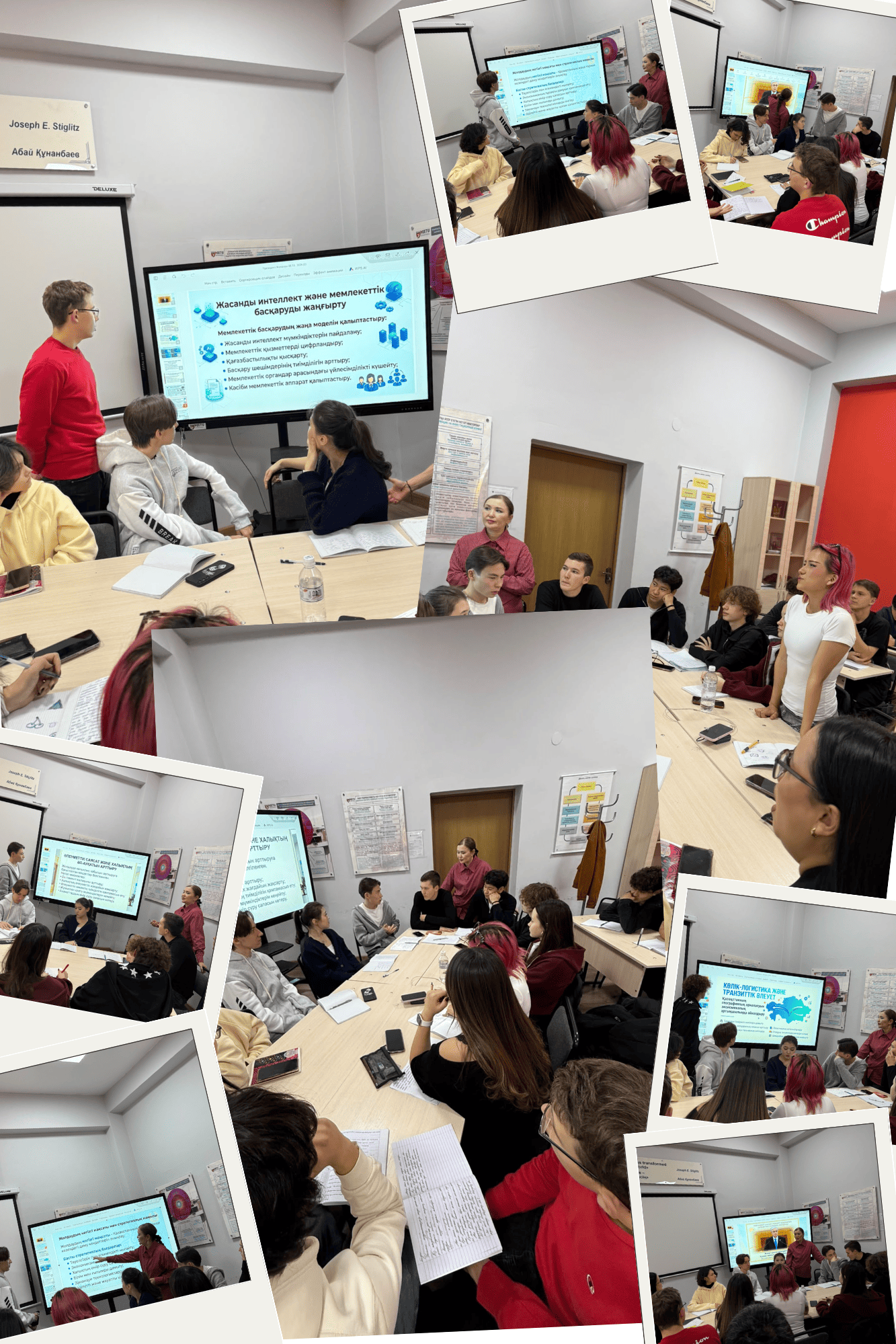
As
part of the academic advising and educational activities, a discussion of the
Address of the President of the Republic of Kazakhstan, Kassym-Jomart Tokayev,
to the people of Kazakhstan dated October 28, 2026, was held with students from
the Russian-language groups ITvEE-26-1r and BT-26-1.1.
The
main objective of the meeting was to examine the key educational issues
highlighted in the Address from the perspective of young people, foster
students’ civic engagement, and strengthen their sense of responsibility for
the future of the country. During the discussion, students
focused on improving the quality of education, creating favourable working
conditions for teachers and reducing their excessive administrative workload,
developing inclusive education, expanding support for children with special
educational needs, and ensuring that the education system has sufficient
qualified specialists. The participants also exchanged views on integrating modern
digital technologies and artificial intelligence into the educational process,
ensuring access to quality education, and expanding opportunities for the
professional development of young people. The most engaging
part of the meeting was the question addressed to the students: “If you were
entrusted with the responsibility of governing the country tomorrow, what three
changes would you introduce first to improve Kazakhstan’s education system?”
In response, first-year students proposed making quality education more
accessible, equipping educational institutions with modern technologies,
supporting teachers’ professional development and status, reducing the gap in
educational quality between urban and rural schools, and expanding
opportunities for young people to develop their talents and abilities. An important idea
emerged during the discussion: educating a knowledgeable, competitive, and
responsible generation is a shared responsibility of the state and society.
Positive changes in education directly influence the future of every young
citizen. The meeting enabled students not only to
familiarise themselves with the educational priorities of the Address but also
to reflect on their relevance to their own lives, future careers, and civic
responsibilities. After all, quality education and a well-informed, responsible
generation are the solid foundations of the country’s future